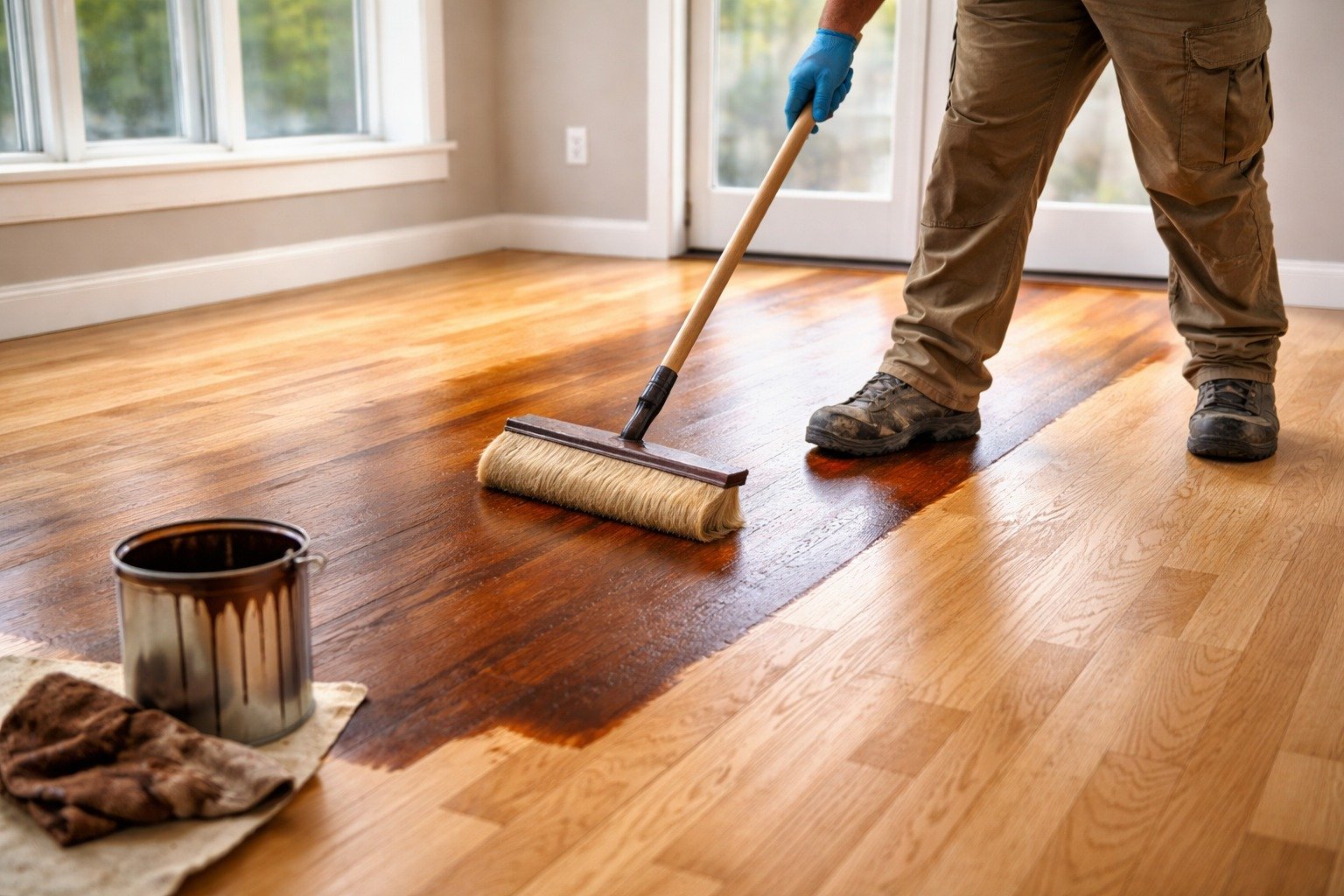
DIY vs. Professional Floor Staining in NJ: Pros & Cons
Floor staining is one of the most effective ways to refresh worn wood floors and enhance the overall look of your home. Whether you want a modern, rich finish or a classic natural tone, staining can dramatically change the feel of your space. Homeowners often face one big question before starting: should you do it yourself or hire a professional? Let’s break down the pros and cons of both options so you can make the right decision for your home.
Understanding Floor Staining
Floor staining involves sanding the surface, applying a wood stain evenly, and sealing it for protection. While it sounds simple, achieving a smooth, consistent finish requires precision, timing, and the right materials. Mistakes can be costly and difficult to fix, which is why many homeowners carefully weigh their options.
DIY Floor Staining: Pros & Cons
Pros of DIY Floor Staining
Cost savings
The biggest advantage of DIY is saving on labor costs. You’ll mainly spend on tools, stain, and sealant.
Full control over timing
You can work at your own pace and schedule the project whenever it’s convenient.
Personal satisfaction
For hands-on homeowners, completing a floor staining project yourself can be rewarding.
Cons of DIY Floor Staining
High risk of uneven results
Inconsistent sanding, overlapping stain, or improper drying can lead to blotches and streaks.
Time-consuming process
From sanding to sealing, DIY staining can take several days—especially without experience.
Limited access to professional tools
Rental equipment may not deliver the same results as industrial-grade machines.
Costly mistakes
Errors often require re-sanding or complete refinishing, which can exceed the cost of hiring a pro.
Professional Floor Staining: Pros & Cons
Pros of Hiring Professionals
Expert craftsmanship
Professionals understand wood types, stain absorption, and finishing techniques, ensuring a flawless look.
Durable, long-lasting finish
Proper preparation and sealing help floors resist wear, moisture, and discoloration over time.
Time efficiency
What may take a homeowner a week can often be completed in a few days by experts.
Customized color matching
Professionals can create custom stain blends to match your interior design style.
Hiring experts for
Floor Staining in NJ
is especially beneficial for older homes, high-traffic areas, or premium hardwood floors where precision matters most.
Cons of Professional Services
Higher upfront cost
Professional services cost more initially, but often save money long-term by avoiding repairs.
Scheduling required
You may need to book in advance, especially during peak renovation seasons.
DIY or Professional: Which Should You Choose?
DIY floor staining may work for small, low-visibility areas if you have experience and patience. However, for large spaces, valuable hardwood, or homeowners who want guaranteed results, professional staining is usually the smarter choice. A well-executed floor stain not only improves appearance but also boosts home value and longevity.
Final Thoughts
Floor staining is an investment in your home’s beauty and durability. While DIY may seem budget-friendly, professional work often delivers superior results with less stress and long-term savings. Carefully consider your skill level, time availability, and expectations before making your decision.
Frequently Asked Questions (FAQs)
1. How long does floor staining usually take?
The process typically takes 2 to 5 days, depending on the size of the area, the condition of the wood, and drying time between coats. Professional teams usually complete the work faster due to proper equipment and experience.
2. Can all types of wood floors be stained?
Most solid hardwood floors can be stained successfully. However, some engineered floors or older, thin planks may not be suitable for staining. A professional inspection helps determine whether staining is the right option for your floor type.
3. Is floor staining messy and dusty?
Sanding does create dust, but professionals use dust-control systems to minimize mess. DIY projects often result in more dust and cleanup due to limited equipment and experience.
4. How long will stained floors last before refinishing is needed?
With proper sealing and regular maintenance, stained hardwood floors can last 7–10 years or more before needing refinishing. High-traffic areas may require touch-ups sooner to maintain appearance.