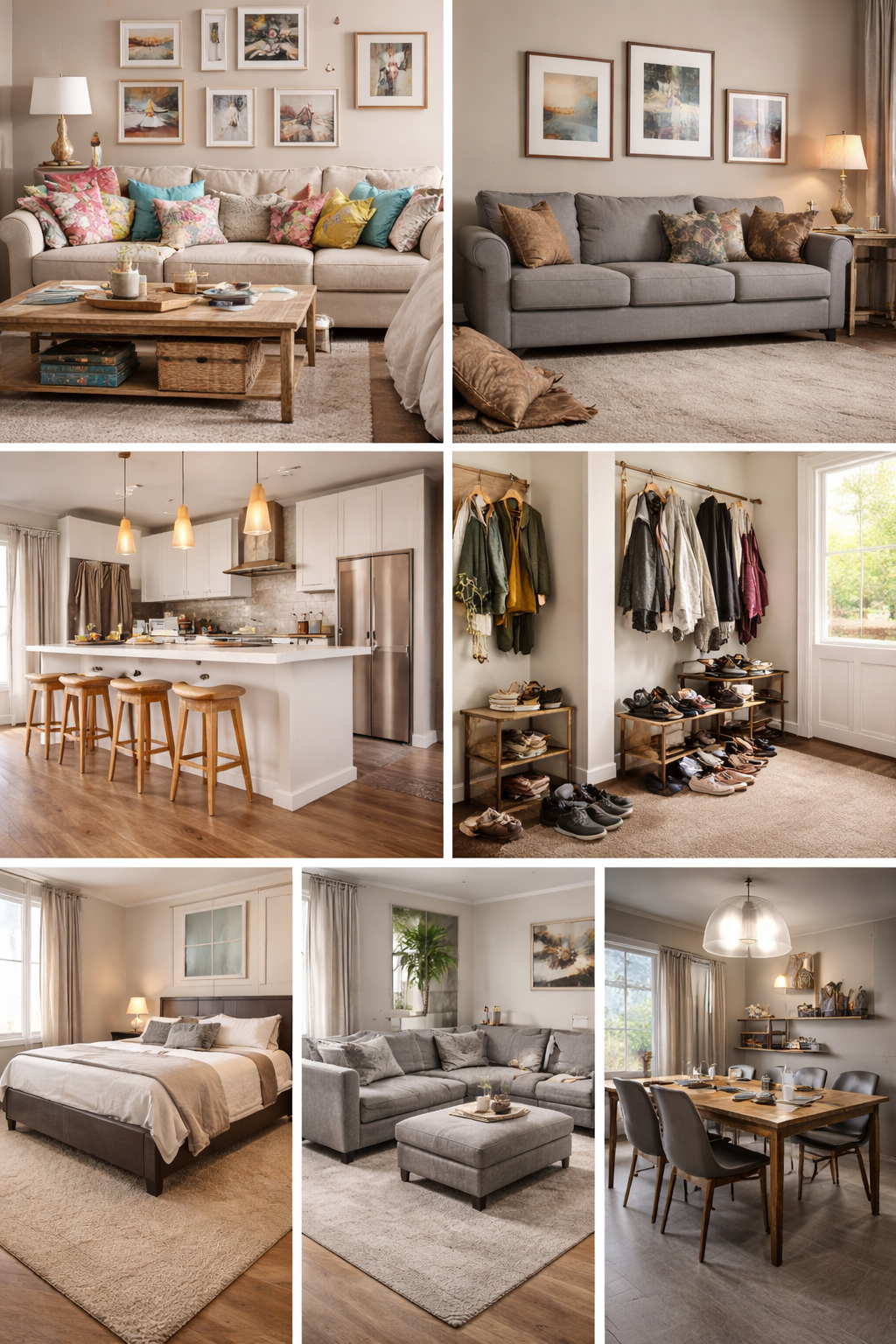
Top 7 Interior Design Mistakes Homeowners Make (and How to Avoid Them)
Creating a beautiful and functional home takes more than choosing trendy furniture or paint colors. Many homeowners unknowingly make interior design mistakes that impact comfort, flow, and long-term value. The good news? These issues are easy to avoid with the right planning and professional guidance.
In this blog, we’ll explore the top 7 interior design mistakes, explain why they happen, and share practical solutions to help you design a home that feels polished, balanced, and timeless.
1. Ignoring Space Planning
One of the most common interior design mistakes is placing furniture without considering room flow. Oversized sofas, poorly placed tables, or cluttered walkways can make even large rooms feel cramped.
How to avoid it:
Measure your space carefully and plan layouts that allow clear movement. Prioritize functionality before aesthetics—good space planning always comes first.
Learn more about professional space planning here.
2. Choosing Style Over Comfort
Many homeowners focus only on how a room looks, forgetting how it feels to live in it. This is one of the most overlooked common decorating errors.
How to avoid it:
Select furniture that balances design with comfort. Test seating, choose durable fabrics, and think about daily use—not just photos.
3. Poor Lighting Decisions
Lighting can completely transform a space, yet it’s often treated as an afterthought. Relying on a single overhead light is a classic example of avoiding bad design practices.
How to avoid it:
Use layered lighting—ambient, task, and accent lighting—to create warmth and depth. Natural light should also be maximized whenever possible.
4. Following Trends Without a Plan
Trendy designs may look great today but can feel outdated quickly. Blindly copying styles from social media is a frequent interior design mistake.
How to avoid it:
Use trends as accents, not foundations. Choose timeless elements for major items and refresh smaller details over time.
5. Ignoring Color Balance
Another of the most noticeable common decorating errors is poor color coordination. Too many bold colors—or none at all—can throw off the entire look.
How to avoid it:
Stick to a consistent color palette. Use neutrals as a base and add color through accessories, artwork, or accent walls.
6. Overlooking Storage Needs
A beautifully designed home can quickly feel messy if storage isn’t planned properly. This is one of those interior design mistakes that affects both style and function.
How to avoid it:
Incorporate smart storage solutions like built-ins, multifunctional furniture, and hidden cabinets to maintain a clean, organized look.
7. Skipping Professional Guidance
DIY design can work for small updates, but larger projects often suffer without expert input. Many homeowners end up making costly home design tips mistakes that could have been avoided.
How to avoid it:
Consult experienced professionals early in the process. Working with experts like
Decor Design Services
ensures your home is stylish, functional, and tailored to your lifestyle.
Final Thoughts
Avoiding these interior design mistakes can save you time, money, and frustration while creating a home you truly enjoy living in. From better layouts to thoughtful lighting and storage, smart design choices make all the difference.
By recognizing common decorating errors, following expert home design tips, and knowing how to avoid bad design, homeowners can confidently transform their spaces into beautiful, functional environments.
Frequently Asked Questions
1. What are the most common interior design mistakes homeowners make?
The most common interior design mistakes include poor space planning, choosing furniture that doesn’t fit the room, ignoring lighting layers, following trends without a long-term plan, and failing to plan adequate storage. These errors often affect both functionality and visual balance.
2. How can I avoid common decorating errors in my home?
You can avoid common decorating errors by measuring your space properly, selecting furniture that matches your lifestyle, using a consistent color palette, and focusing on comfort as much as aesthetics. Planning before purchasing is key to better results.
3. Why is space planning important in interior design?
Space planning ensures smooth movement, proper furniture placement, and balanced room proportions. Without it, rooms may feel crowded or awkward, which is one of the biggest interior design mistakes homeowners face.
4. How does lighting affect interior design?
Lighting impacts mood, visibility, and overall design quality. Poor lighting can make even well-decorated rooms look dull. Using layered lighting helps avoid bad design and enhances both functionality and ambiance.
5. Is following interior design trends a mistake?
Following trends blindly can be risky. Trends change quickly, and overusing them is a common design error. A better approach is combining timeless design elements with subtle trend-based accents to maintain long-term appeal.